Traveling with children changes the calculus of any trip — distances need to be shorter, activities need built-in payoff, and "educational" only works if it's also fun. Ghana, it turns out, is unusually well suited to family travel. Its best attractions tend to be interactive rather than look-and-move-on: canopy walkways you cross yourself, monkeys you can feed by hand, crocodiles you can (carefully, with a guide) get close to, and museums built around storytelling rather than glass cases. This guide gathers nine attractions that consistently work for families, organized roughly from Accra outward, with practical notes on what actually matters when you've got kids in tow — shade, toilets, walking distance, and how long you can realistically expect them to hold everyone's attention.
National Museum of Ghana — An Easy History Lesson
Ghana's National Museum in Accra is compact by international standards, which is exactly why it works well with children — you can cover the whole collection in an hour without anyone melting down. Exhibits cover Ghanaian history from pre-colonial kingdoms through independence, with displays of traditional textiles, masks, drums, and everyday objects that give kids a tangible sense of history rather than just dates on a wall.
Age range: Best for ages 6 and up, when reading captions or following a guide's narration holds attention.
Good to know: Go early in the day when the museum (and Accra traffic getting there) is at its calmest.
Kwame Nkrumah Memorial Park & Mausoleum — Ghana's Story in One Stop
This memorial park in central Accra honors Ghana's first president and the country's independence movement, set in open, landscaped grounds with fountains, a small museum, and Nkrumah's mausoleum itself. The open space is genuinely kid-friendly — there's room to walk around rather than being confined to narrow gallery corridors — and the on-site museum's photographs and personal items make independence history concrete for children who've maybe just started learning about it in school.
Age range: Works for a wide range, roughly 5 and up; younger kids will enjoy the open grounds even without engaging with the exhibits.
Good to know: The park has shaded benches and is a good midday stop between other central Accra activities.
Labadi Beach — A Family Beach Day in the City
Labadi Beach in Accra is loud, social, and full of activity — pony rides, drumming, football on the sand, and food stalls — which makes it a hit with children who want more than just sitting on a towel. It's also convenient: no long drive required if you're staying in Accra, and shallow areas near shore are manageable for supervised wading.
Age range: All ages, though younger children should stay in shallow water under close supervision — like most Ghanaian beaches, currents can be strong further out.
Good to know: Weekends are busiest and most fun for older kids; weekday mornings are calmer for toddlers.
Aburi Botanical Gardens — Cool Air and Giant Trees
Up in the hills above Accra, Aburi's botanical gardens offer something the capital rarely does: cool air, and space to run around under towering avenues of silk cotton and rubber trees over a century old. The gardens are spacious and flat enough for strollers, with picnic-friendly lawns, and the drive up into the hills is a scenic change of pace in itself.
Age range: All ages — it's one of the easiest "everyone will have a good time" stops on this list.
Good to know: Bring a picnic; there are food vendors nearby in Aburi town but the gardens themselves are best enjoyed with your own snacks and a blanket.
Paga Crocodile Pond — Touch a (Sacred) Crocodile
For kids who think crocodiles only exist behind thick glass, Paga is a genuine thrill: a sacred pond in the Upper East Region where trained handlers coax crocodiles onto the bank and allow supervised visitors — including reasonably confident kids — to sit beside, and even touch, a live crocodile. It's a far more remote stop than most on this list, best combined with a broader northern Ghana trip.
Age range: Best for kids around 7 and up who can follow safety instructions calmly; the handlers are experienced but full stillness and listening matter here.
Good to know: Never let a child approach without a handler present — the crocodiles are wild animals, sacred status notwithstanding.
Tafi Atome Monkey Sanctuary — Feed the Monkeys
Tafi Atome in the Volta Region protects a resident troop of sacred mona monkeys accustomed to close human contact, and guided forest walks let visitors — kids very much included — hand-feed bananas to monkeys that will climb onto an arm or shoulder for the reward. Few wildlife encounters land better with children than this one.
Age range: Great for ages 4 and up; very young toddlers may find an unexpected monkey landing on them startling rather than delightful.
Good to know: Buy bananas at the sanctuary entrance rather than bringing outside snacks, and let the guide manage the feeding process.
Boti Falls — Twin Waterfalls and a Rope Bridge
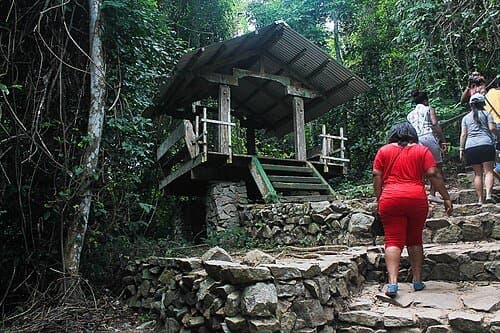
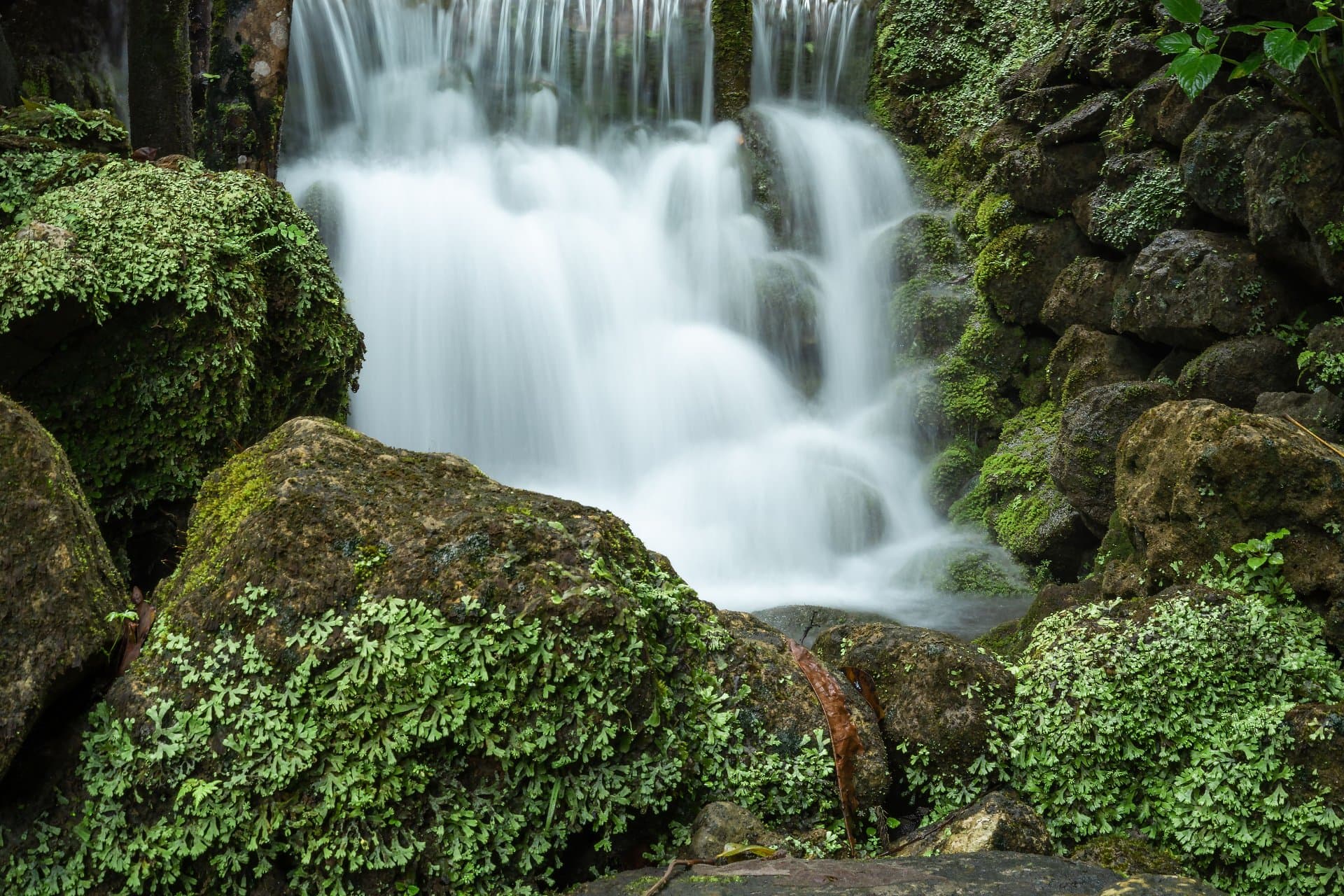
Boti Falls in the Eastern Region is a genuine adventure-park-style stop for families: twin waterfalls that merge during the rainy season, a swimming pool at the base, and a wobbly suspension bridge nearby that older kids in particular love crossing. The surrounding forest reserve also has the odd "umbrella rock" formation a short walk away, giving families a natural add-on stop.
Age range: Ages 5 and up for the falls and swimming area; the suspension bridge is better suited to slightly older, sure-footed children.
Good to know: The stone steps down to the falls can be slippery — closed-toe shoes make the descent much easier with kids.
Hans Cottage Botel — Sleep (and Eat) With Crocodiles
Hans Cottage Botel, near Kakum National Park in the Central Region, is a hotel and restaurant built over a pond stocked with resident crocodiles, connected by wooden walkways so guests can eat breakfast or lunch literally a few feet above basking crocodiles. It sounds like a novelty and is one, but it's also a genuinely comfortable, family-friendly stopover — ideal as a base the night before or after visiting Kakum.
Age range: All ages; children old enough to understand "don't lean over the railing" will get the most enjoyment out of the crocodile-watching.
Good to know: Book a room or table with a direct pond view if the crocodile-watching is the main draw for your family.
Kakum National Park — Canopy Walk Adventure
Kakum's canopy walkway is the single most famous family activity in Ghana for a reason: seven swaying rope-and-plank bridges strung nearly 30 meters above the rainforest floor, connecting platforms built around the park's giant trees. It's thrilling without being genuinely dangerous — sturdy railings and safety netting keep it accessible for kids who can handle a bit of height and gentle swaying.
Age range: Generally recommended for ages 5 and up; very young children may be uneasy with the height and movement, though guides are used to reassuring nervous walkers of any age.
Good to know: Go early morning for cooler temperatures, thinner crowds, and the best chance of spotting wildlife in the canopy below.
Plan Your Trip
A family-friendly Ghana itinerary flows naturally in three clusters: Accra itself (National Museum, Nkrumah Park, Labadi Beach, with Aburi as an easy hill-country day trip), the Central Region (Kakum and Hans Cottage Botel as an overnight pairing), and further-flung adventures for families with more time and older kids (Boti Falls in the east, Tafi Atome and Paga for wildlife-focused travelers willing to go further north). Pack more snacks and water than you think you'll need, build in downtime between big activities, and don't over-schedule any single day — the best family memories in Ghana tend to come from the unhurried stretch after the main attraction, not the attraction itself.
References

 Kofi Mensah